The Lowest-Maintenance Commercial Floor You Can Own
Mechanically polished concrete: diamond-ground, chemically densified, and refined to the sheen you choose. No coatings to peel, no wax to strip — just a floor that gets maintained with a dust mop and an auto-scrubber.
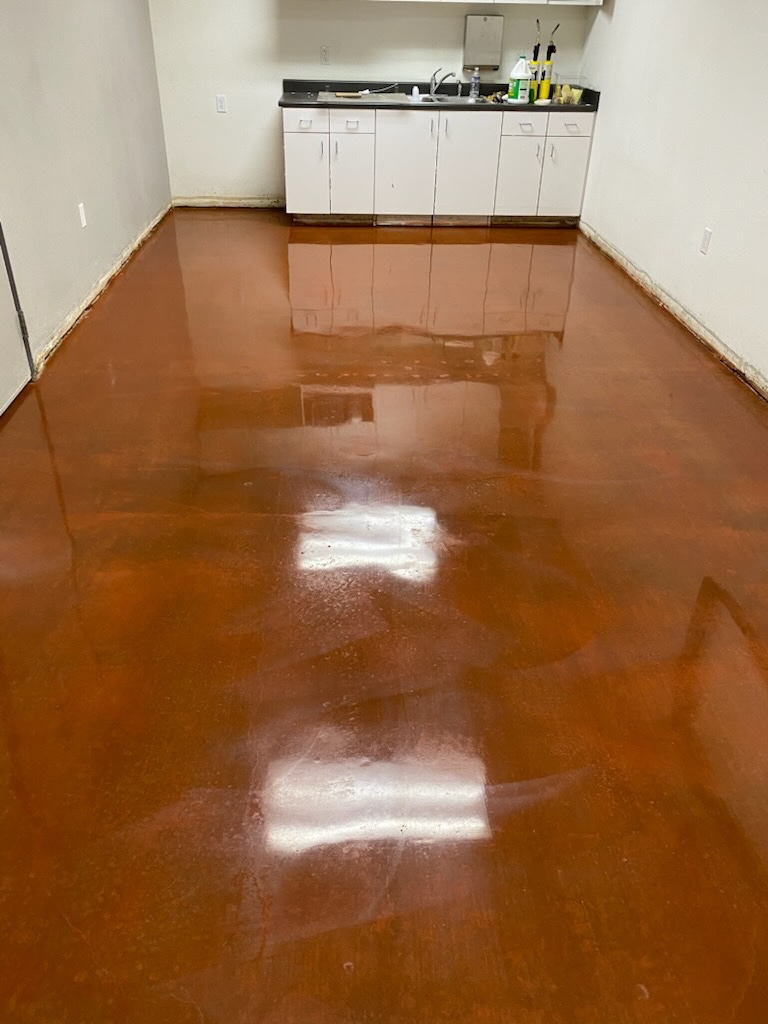
Polished concrete is not a coating — it is the slab itself, mechanically refined. KCS uses planetary grinders with progressively finer diamond tooling to cut, hone, and polish the concrete surface, applying a lithium silicate densifier mid-process that hardens the slab and makes the polish permanent. The result is a floor with no film to scratch, peel, or yellow: light-reflective, abrasion-resistant, and maintained with nothing more than routine dust mopping and periodic auto-scrubbing with a neutral cleaner.
More about concrete polishing
Sheen level is a specification, not an accident. We finish floors anywhere from a 400-grit satin — popular in warehouses and back-of-house — to an 800–1500-grit high gloss for showrooms, lobbies, and retail. Existing slabs with mastic, old coatings, or minor damage are ground clean first; expansion joints get filled where specified; and a stain-guard densifier topcoat adds resistance to spills in food-adjacent or retail environments.
For facility managers, the math is the appeal: polished concrete typically costs less per year than maintaining VCT once you account for stripping, waxing, and materials, and it handles forklift and cart traffic that would destroy a finished tile floor. We polish new slabs, restore neglected ones, and maintain existing polished floors with periodic re-burnishing across the East Bay, Tri-Valley, San Francisco, Solano County, Sacramento, and the Central Valley.
What's Included
Planetary Diamond Grinding
Multi-head planetary grinders with metal-bond and resin-bond diamond tooling cut and refine the slab in controlled grit progressions.
Chemical Densification
Lithium silicate densifier penetrates and hardens the slab, increasing abrasion resistance and locking in the polish.
Selectable Sheen Levels
Matte, satin, semi-gloss, or high gloss — specified by grit level, so the finished floor matches the design intent and the traffic reality.
Coating & Mastic Removal
Old epoxy, glue, paint, and failed coatings ground off as part of the prep, turning a liability slab into a finished floor.
Stain Protection
Optional penetrating stain-guard treatments add spill resistance for retail, food service adjacency, and showroom environments without creating a film.
Dust-Controlled Process
Grinders run tethered to HEPA dust extractors, keeping silica dust contained — safe for occupied buildings and phased work.
How It Works
- 1
Slab Evaluation
We inspect the concrete's hardness, flatness, existing coatings, and damage, and confirm the slab is a good polishing candidate.
- 2
Spec & Flat Quote
Sheen level, aggregate exposure, joint treatment, and stain protection are specified, and you receive a fixed price for the scope.
- 3
Grind & Prep
Coatings and mastic are removed, cracks and joints addressed, and the slab cut flat with metal-bond diamonds.
- 4
Densify & Polish
Densifier is applied and the floor refined through resin-bond grits to the specified sheen.
- 5
Protect & Hand Off
Optional stain guard is applied, and you get a simple maintenance plan — dust mop, neutral-cleaner scrubbing, periodic burnish.
Concrete Polishing FAQs
How much does concrete polishing cost?
It varies with slab condition, existing coatings, target sheen, and square footage — so we evaluate the slab first, then quote flat. Heavy mastic removal costs more than polishing a clean slab, and the quote will say so upfront.
How long does polished concrete last?
Decades, with minimal care. There is no coating to wear through; high-traffic floors typically want a re-burnish every year or two and eventually a light re-polish. It is the longest-lived commercial floor finish available.
Can you polish our old, stained warehouse slab?
Usually, yes. Grinding removes most staining and surface damage, though deep oil saturation or severe spalling can limit the cosmetic result. We tell you what the slab can realistically become before you commit.
Is polished concrete slippery?
Less than it looks. Clean, dry polished concrete generally meets slip-resistance standards and often outperforms waxed tile. Matte and satin finishes offer additional traction where wet conditions are expected.
Can the work be done while our facility operates?
Yes. Dust extraction keeps the process contained, and we phase sections overnight or on weekends so operations continue around the work.
How is polished concrete maintained afterward?
Dust mop daily, auto-scrub with a neutral cleaner as needed, and burnish periodically. No stripping, no waxing, no special chemicals — that simplicity is the main reason facility managers switch.
Free walkthrough · Flat quote
Ready to talk about concrete polishing?
Tell us about your building and we'll schedule a free walkthrough — then send a flat, no-surprises quote.