Disinfection That Follows the Science, Not the Theater
Electrostatic application and high-touch surface programs using EPA-registered, List N disinfectants — with dwell times actually honored. Scheduled preventive service or rapid response after a confirmed illness.
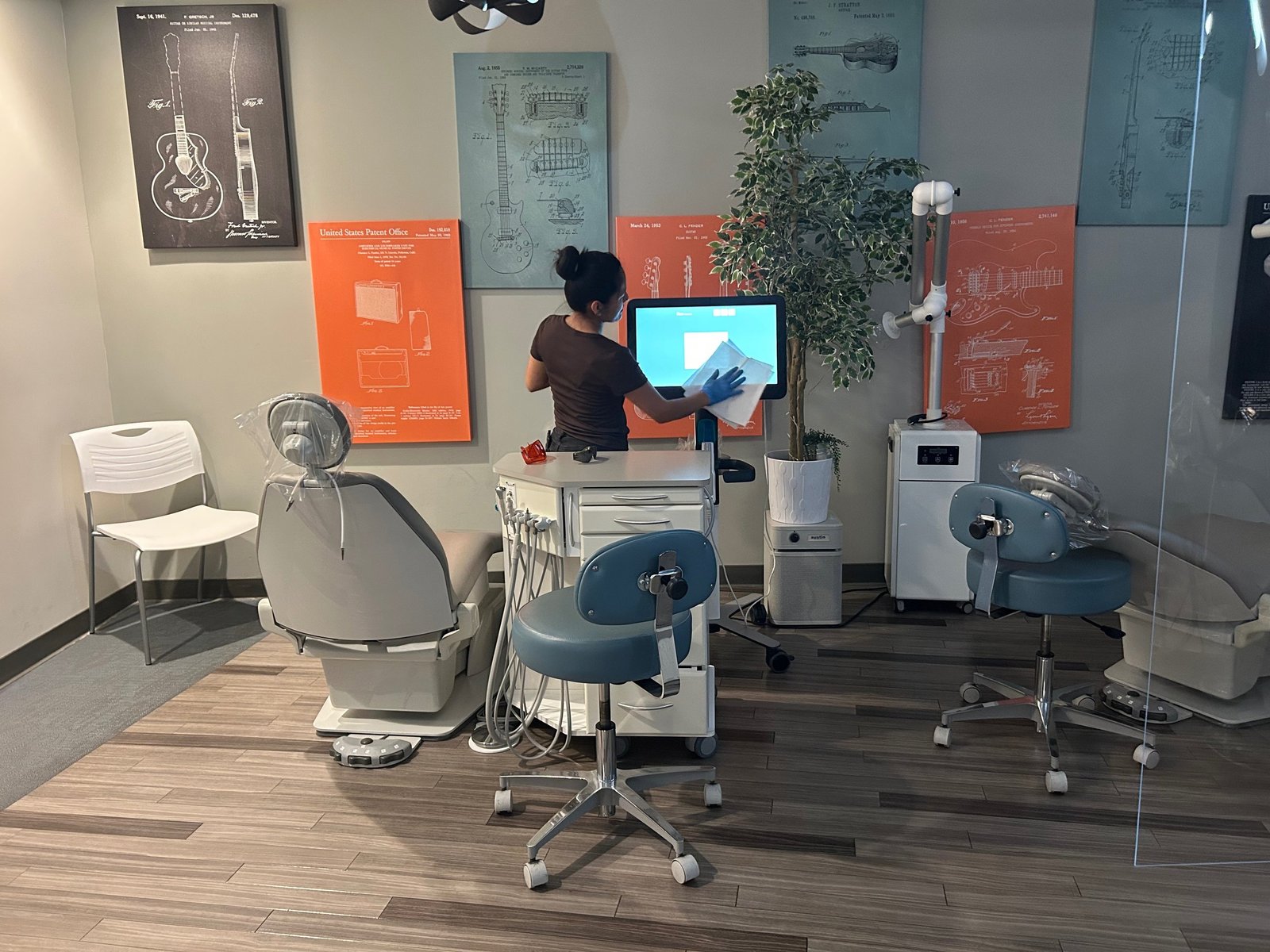
Disinfection only works when three things line up: the right product, applied to a cleaned surface, left wet for its full contact time. A lot of what gets sold as disinfection skips at least one of those. KCS builds its programs on the label: EPA-registered disinfectants (List N and equivalent registrations for the pathogens of concern), applied after soil is removed — because disinfectant cannot penetrate grime — and given their full dwell time before surfaces are wiped or reopened.
More about disinfection
For broad coverage, we use electrostatic sprayers, which apply a charge to the disinfectant droplets so they wrap around and coat surfaces evenly — including the sides and undersides of desks, chairs, and equipment that trigger-spray application misses. For daily defense, touchpoint programs target the surfaces hands actually contact: door handles, push plates, light switches, elevator buttons, faucets, dispensers, shared keyboards, and breakroom equipment, on a documented checklist your compliance file can reference.
Facilities use us two ways. Scheduled programs — weekly or monthly electrostatic service layered onto janitorial touchpoint work — suit schools, churches, medical-adjacent offices, and any building that wants illness prevention on the calendar. Rapid response handles the other case: a confirmed flu, norovirus, or COVID case in the building, where we disinfect the affected areas overnight and document what was treated. Commercial facilities only, across the East Bay, Tri-Valley, San Francisco, Solano County, Sacramento, and the Central Valley.
What's Included
Electrostatic Spraying
Charged-droplet application wraps disinfectant around complex surfaces — desks, chairs, equipment, restroom fixtures — for coverage trigger sprayers cannot match.
EPA-Registered Chemistry
List N and appropriately registered disinfectants matched to the target pathogens, used at label dilution with label contact times.
Touchpoint Programs
Documented daily or per-visit disinfection of handles, switches, buttons, faucets, and shared equipment — the surfaces that actually transmit illness.
Clean-First Protocol
Surfaces are cleaned before they are disinfected, because disinfectant applied over soil is largely wasted. Basic, and routinely skipped by others.
Rapid Illness Response
Confirmed case in the building? We schedule overnight electrostatic treatment of affected areas, typically within 24 hours, with documentation of what was treated.
Service Documentation
Dated records of areas treated, products used, and contact times — useful for school boards, HR, tenants, and liability files.
How It Works
- 1
Facility Consultation
We review your building, population, and concern — routine prevention, a specific outbreak risk, or a response event — and identify treatment zones.
- 2
Program Design & Flat Quote
Product selection, method, frequency, and areas are specified in writing with a flat per-service or monthly price.
- 3
Clean & Disinfect
Surfaces are cleaned first, then treated by electrostatic application or manual touchpoint protocol with full label dwell time.
- 4
Ventilation & Reopening
Treated areas are ventilated per product requirements and released for occupancy on a stated timeline — usually by next business morning.
- 5
Documentation
You receive a service record of areas, products, and times for your files, plus program adjustments as seasons and risk change.
Disinfection FAQs
How much does disinfection service cost?
It depends on square footage, method, and frequency — we walk the facility or review a floor plan, then quote flat per service or per month. Recurring programs price better than one-off treatments.
What is electrostatic disinfection and is it better than wiping?
Electrostatic sprayers charge the disinfectant droplets so they wrap and adhere to all sides of surfaces, covering far more area per hour than wiping. It complements touchpoint wiping rather than replacing it — high-touch metal and plastic still benefit from manual attention.
Are the chemicals safe for our staff, students, or congregation?
We use EPA-registered products at label dilutions, treat after hours, and ventilate per label before reopening. Product safety data sheets are provided for your records, and we can select chemistry sensitive to asthma and fragrance concerns.
Someone in our office tested positive for flu/COVID. How fast can you treat?
Rapid response is typically scheduled within 24 hours, performed overnight so the space is treated, ventilated, and back in service by morning, with documentation of what was done.
Is one-time disinfection enough, or do we need a recurring program?
One-time treatment addresses an event; it does not prevent the next one. Buildings with vulnerable or dense populations — schools, churches, shared offices — get the real benefit from scheduled service layered on daily touchpoint work. We will recommend honestly based on your building, not sell fear.
Does disinfection replace regular cleaning?
No — it depends on it. Disinfectants underperform on soiled surfaces, which is why our protocol is always clean first, then disinfect. The best results come from pairing a disinfection program with a solid janitorial scope.
Free walkthrough · Flat quote
Ready to talk about disinfection?
Tell us about your building and we'll schedule a free walkthrough — then send a flat, no-surprises quote.